
With momentum for long-term investment building, Africatown environmental advocates identified a lack of data about the safety of Hog Bayou and sought assistance from the Mobile Baykeeper, the Environmental Integrity Project, the Sierra Club, and the Center for Applied Environmental Science to help us identify potential risks and challenges that may come along with the sort of increased public access to Hog Bayou that advocates and residents have sought for years.
Together, we are asking community folks to take a survey about fish consumption concerns related to Hog Bayou. Everyone can take the survey! It only take a few minutes.
Take the Hog Bayou Community: Health Risk Survey (Fish Consumption) here.
Read on to learn more about Hog Bayou’s potential to serve Africatown’s future!!
And check out the Mobile Baykeeper story “Reclaiming Africatown’s Hog Bayou” in their Currents magazine about the cultural significance of the water.
The Africatown Neighborhood Plan
In 2015 after years of being a sidelined City of Mobile Fair Housing Act CDBG-promised priority, the Africatown community was given the opportunity to develop a neighborhood plan to help it describe its interests and desires related to its future development. The residents who came together over the summer of 2015 were asked, “What are the boundaries of Africatown?” The only rule: it had to be within the City of Mobile to be subject to any plans described in what would eventually become the city’s Africatown Neighborhood Plan.
As reflecting in the plan adopted by the City of Mobile in early 2016, the consensus identified Plateau, Magazine Point, Happy Hills, Kelly Hill, and Lewis Quarters. Kelly Hill would later be given status as a single block in the City of Prichard, all that remained after the ruinous expansion of present-day Africatown Blvd from a 2-lane boulevard to a 5-lane interstate highway and hazardous cargo route.
All of the neighborhoods identified, whether in Prichard or Mobile were currently occupied by residents. The other historic residential neighborhoods of Africatown had long been lost to demolition by their owners to make way for the industrial land use patterns seen today.
The boot shape of the map of the City of Mobile’s Africatown Planning Area could finally be used to illustrate how at least part of the Africatown community was positioned with respect to the municipal boundaries of Mobile, Prichard, and Chickasaw.
 The community also emphasized in the Africatown Neighborhood Plan its historic relationship to the waterways and natural spaces that surround it and how the loss of recreational and spiritual access has affected attitudes in the community around economic development opportunities that the water may provide a way towards.
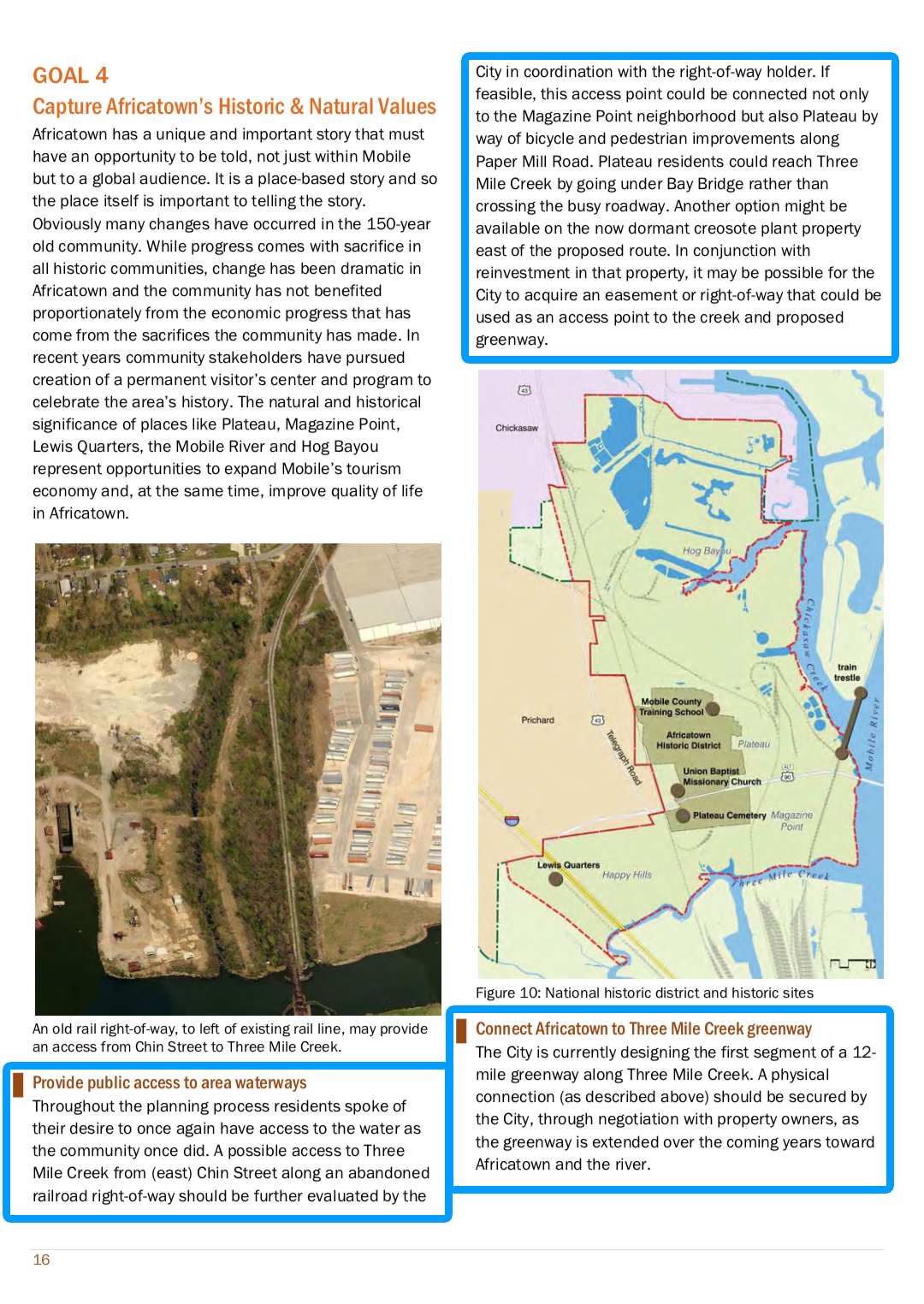
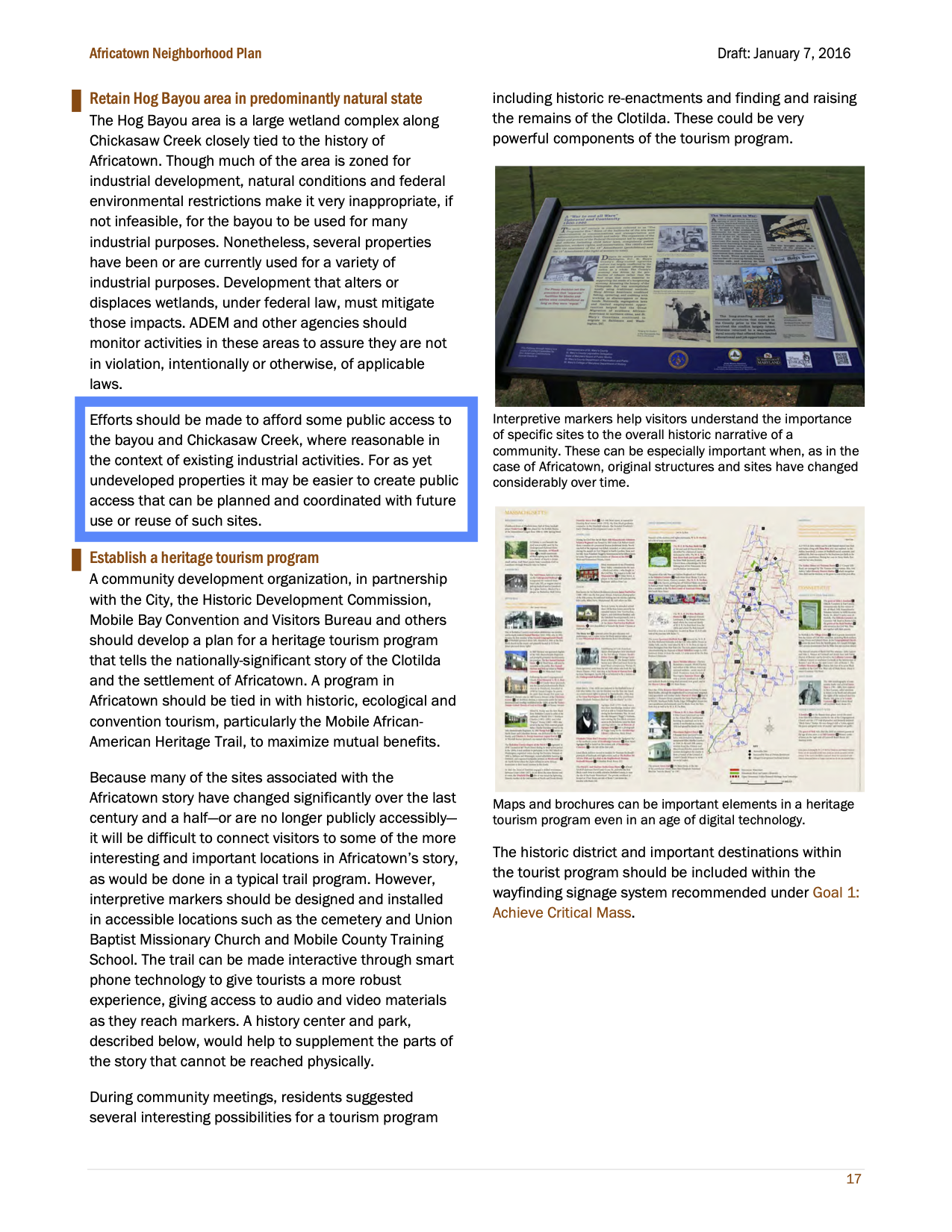
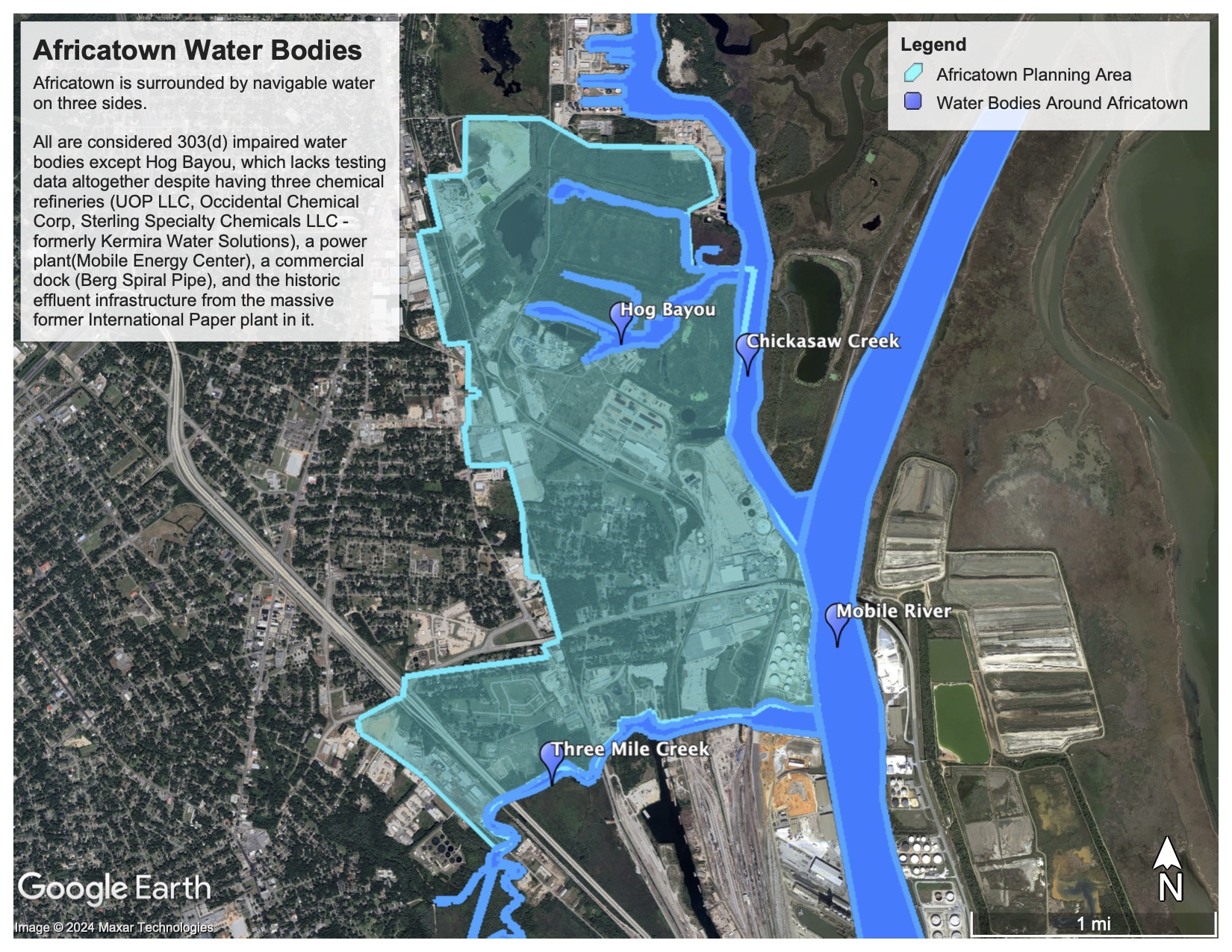 The Plan provided insights into and thoughtful consideration towards many of Africatown’s challenges and opportunities, and the community’s relationship to Hog Bayou is no different. Pages 16 and 17 of the plan (below, emphasis added) make clear that Africatown should be included in local natural recreation pathways like the Three Mile Creek Greenway Initiative and that re-establishing public access to Hog Bayou would create an important asset for the region.
The Africatown Connections Blueway
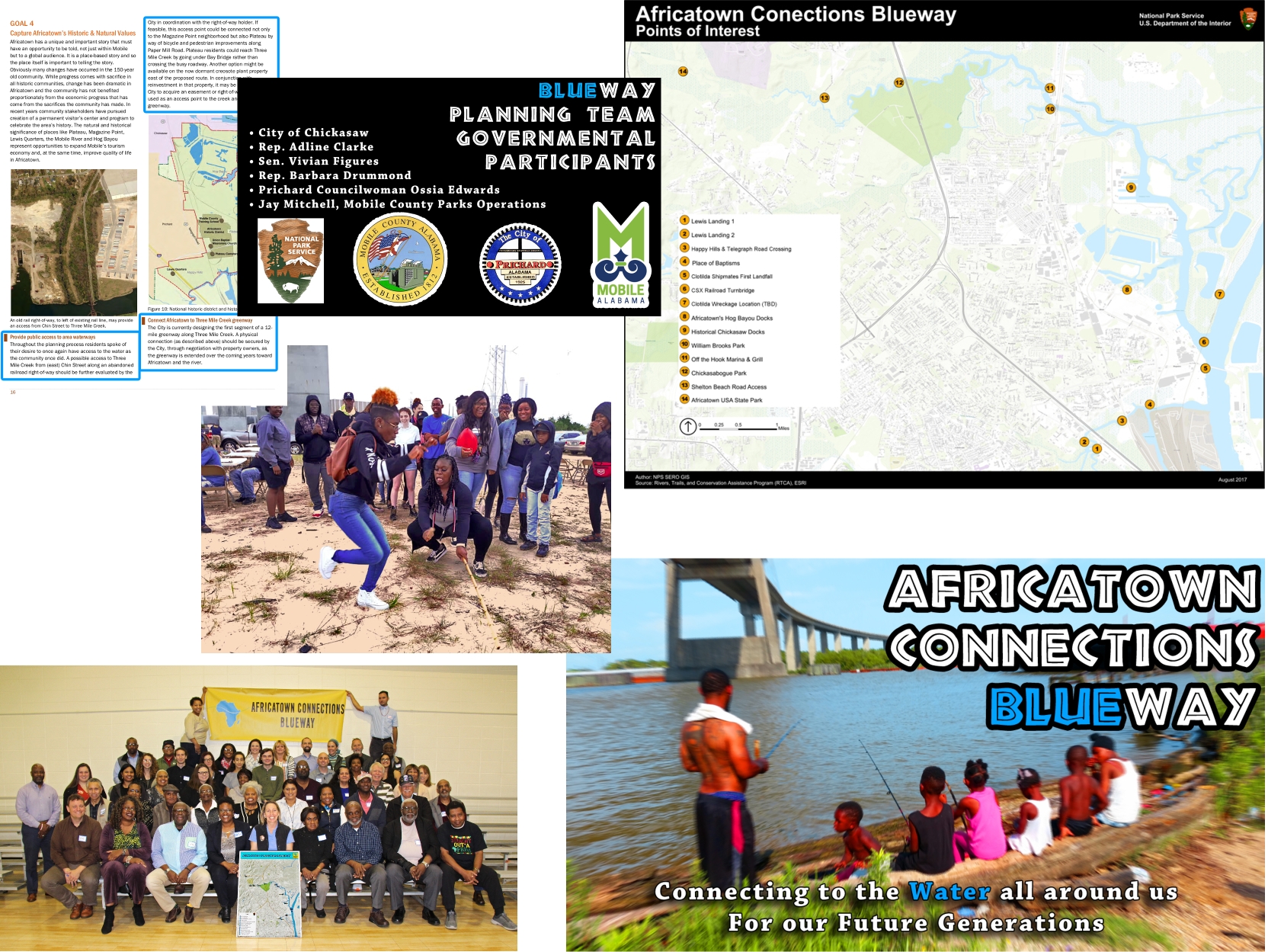
Identifying these potential assets inspired the Africatown community to work with the National Park Service’s Rivers, Trails, and Conservation Assistance program (NPS-RTCA) to establish what became the Africatown Connections Blueway planning team to identify Africatown’s potential greenway and blueway assets to enhance quality of life for residents and visitors. The Africatown Connections Blueway project enjoyed the support of the Cities of Mobile, Prichard, and Chickasaw as well as Mobile County and several elected officials. After some deliberation, points of interest were established, and cultural activities reflecting the Africatown community’s historic relationship with its waterways began happening anew.
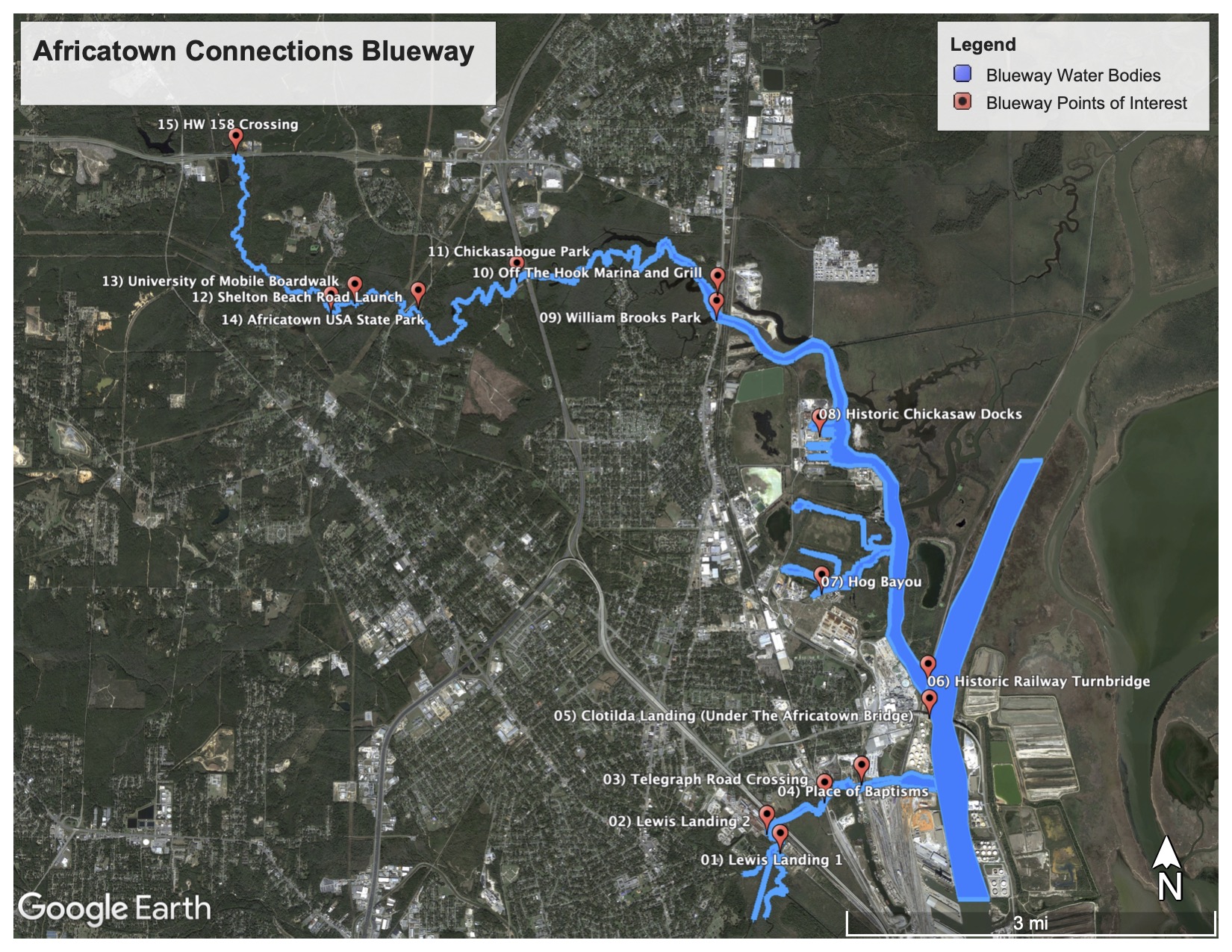 Additional planning work commenced where a lack of plans related to the water existed. These efforts resulted in a fruitful collaboration with Mississippi State University’s Department of Landscape Architecture and Environmental Design, which resulted in community-informed designs encompassing the areas around the Africatown Planning Area. In a series of community meeting, these plans were enthusiastically received by the Africatown community precisely because they showcased overlooked assets and offered so much food for thought. In 2022, these designs won the Society of Outdoor Recreational Professionals’ Project Excellence Award.

The Move Well Mobile County and Resilient Mobile Plans
Ultimately, these designs inspired public comment from Africatown stakeholders and advocates that were received for regional planning efforts like the Move Well Mobile County Comprehensive Pedestrian and Bicycle Plan and the City of Mobile’s Resilient Mobile Plan.
Adopted by the Mobile Metropolitan Planning Organization on September 25, 2024, the Move Well plan incorporates and assesses many visionary Africatown projects. Three were even designated as “Early Action Projects” for immediate implementation, with the Mobile MPO having developed pre-engineering budgets, facility type descriptions, etc. These three are described on pages 74 of the Move Well Plan as Projects 1, 2, and 10. Both Projects 1 and 10 are directly inspired by the Africatown Connections Blueway designs and ideas.
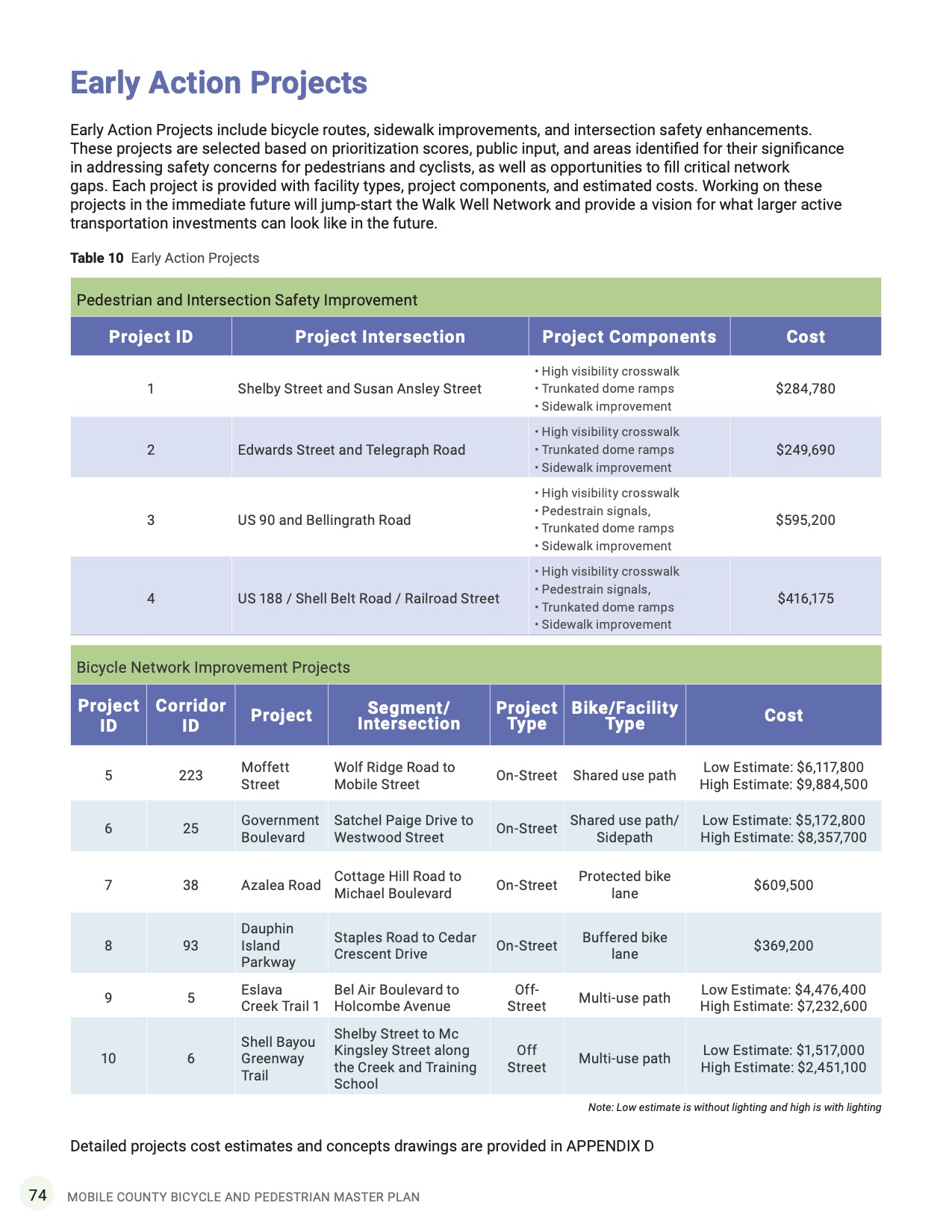
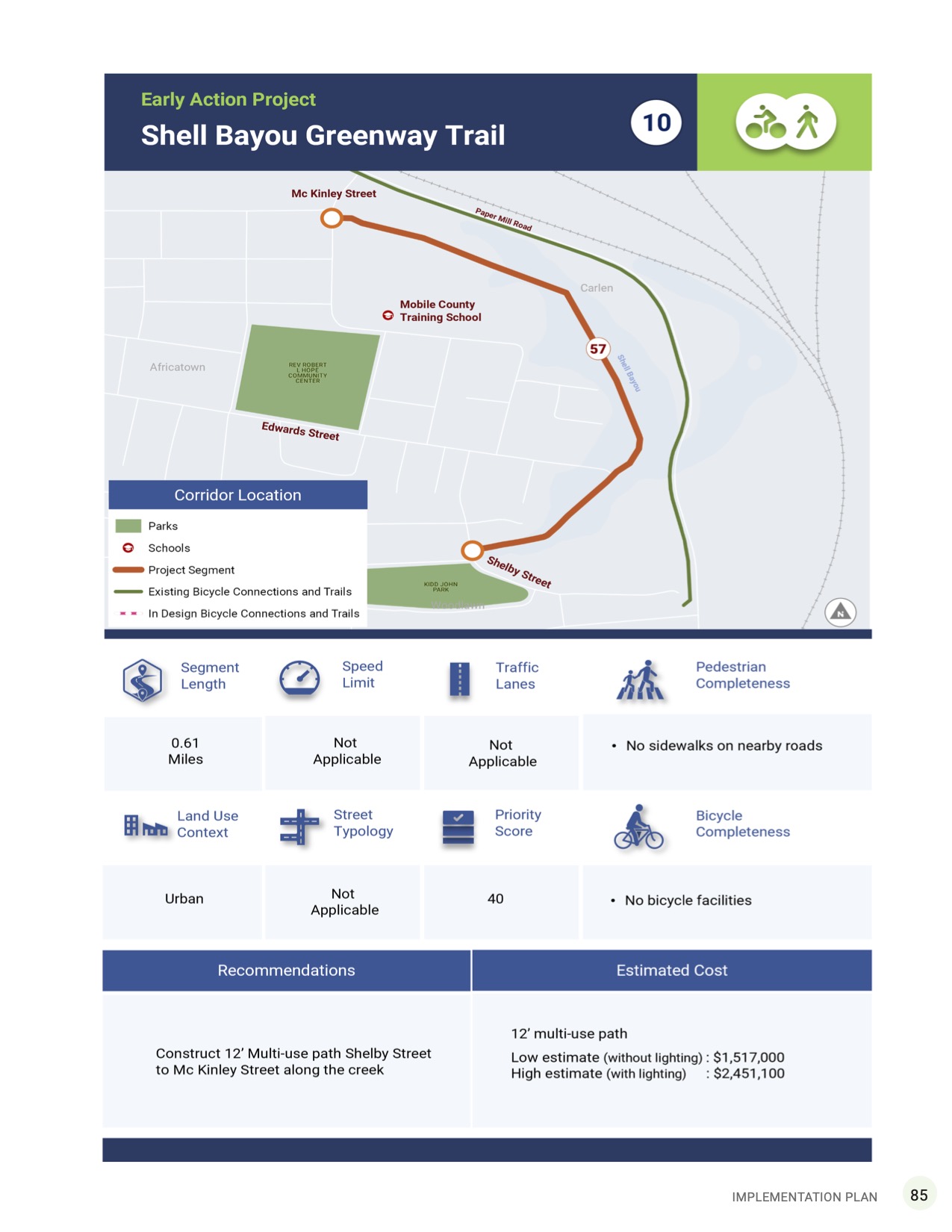 Project 10 would create a multi-use walking/bicycle path precisely where the Africatown Connections Blueway had championed the possibility. The scoring of the project so high in the Move Well Mobile County assessment speaks to the need and opportunity a project like it could serve for the Africatown community. The project could potentially tie into a path leading to a future public access point park at Hog Bayou, while Project 1 would connect Kidd Park with the Project 10 greenway with a crosswalk and waymaking infrastructure.
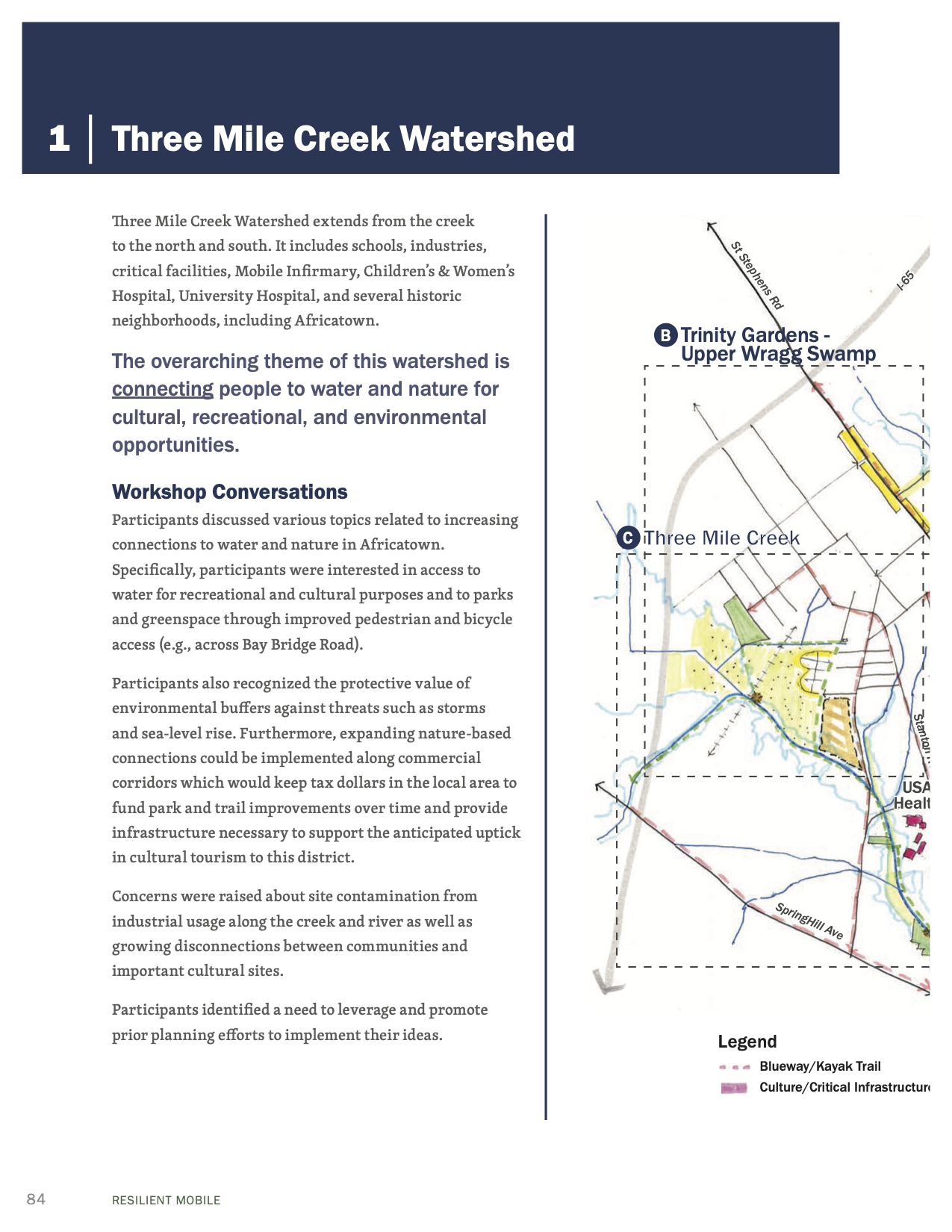
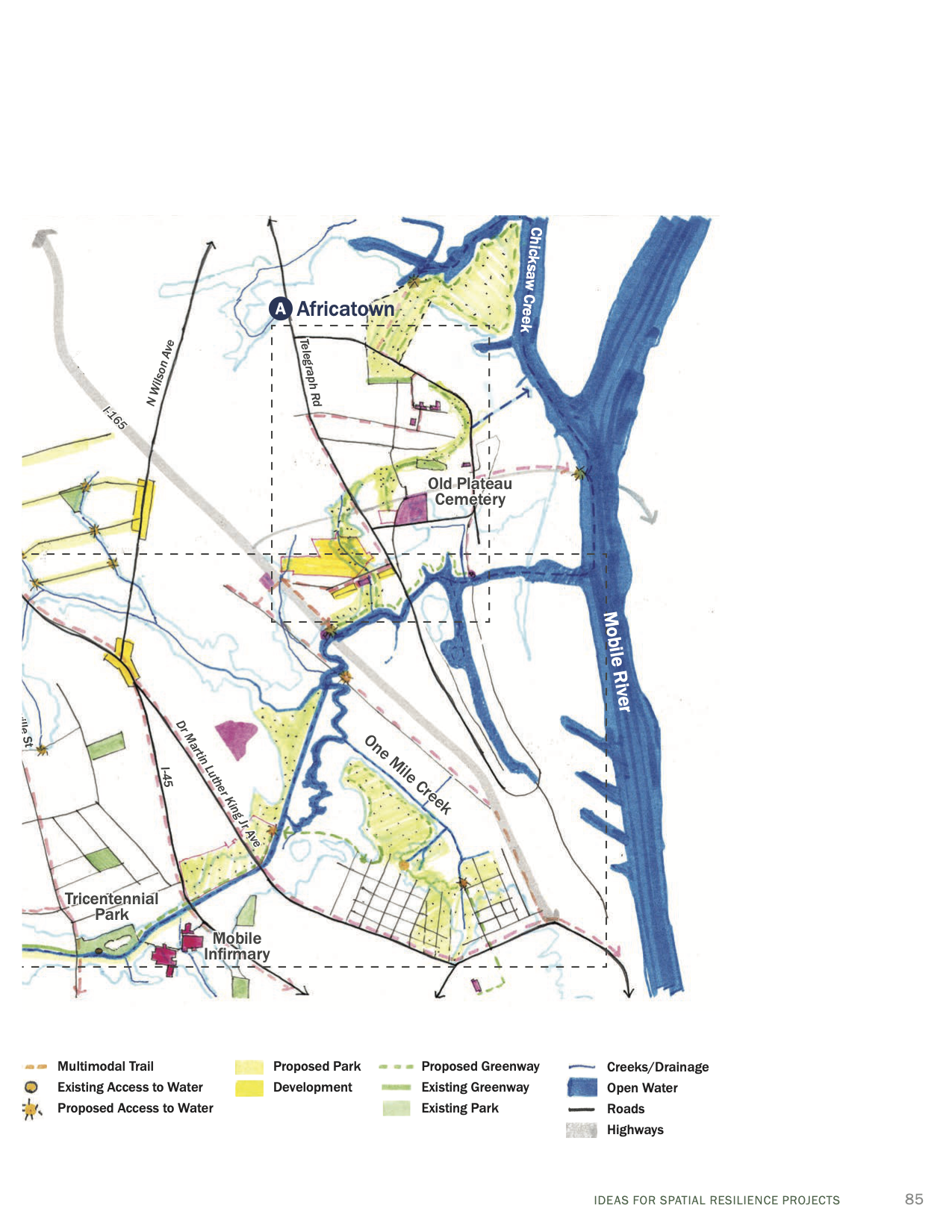
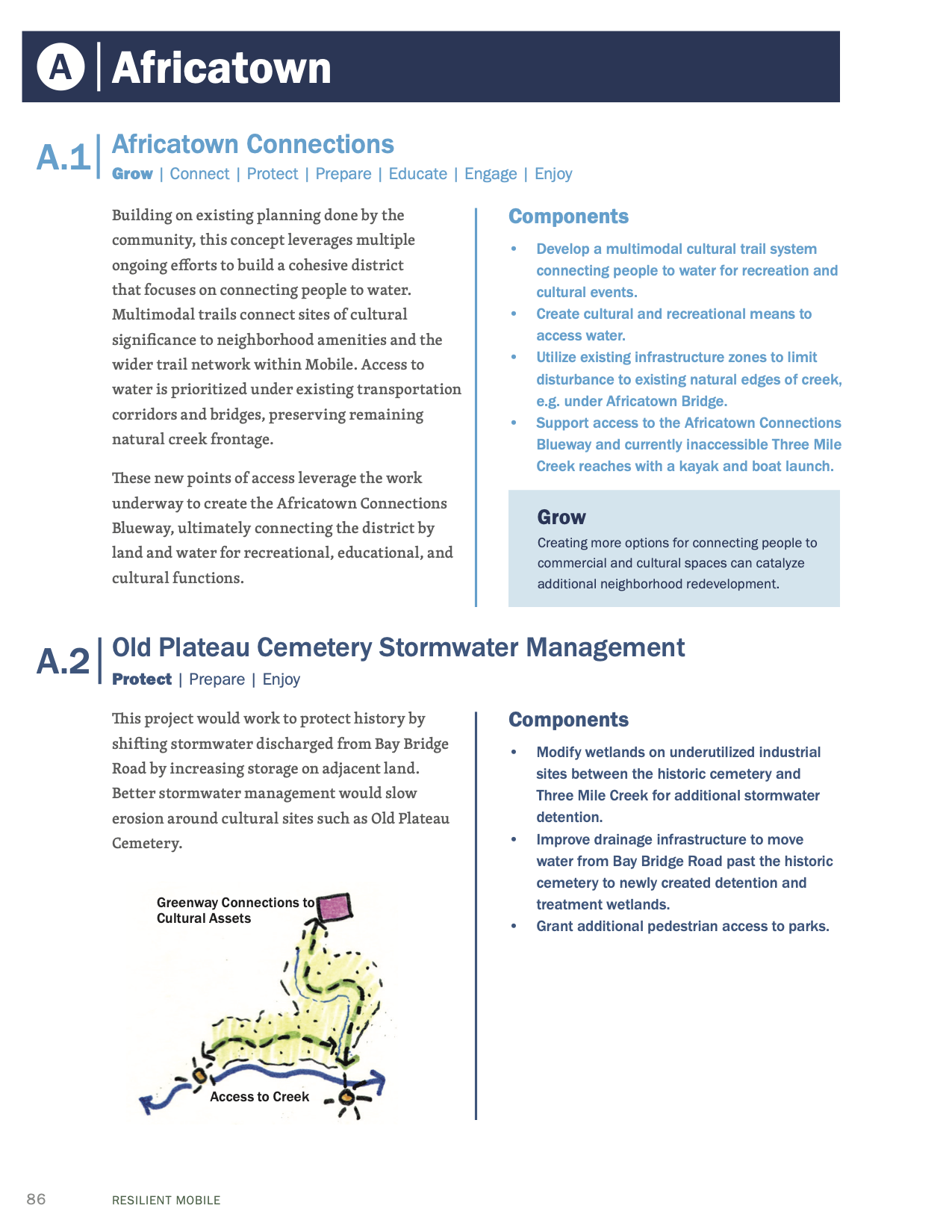
Published on March 11, 2025, the City of Mobile’s Resilient Mobile Plan took what Africatown stakeholder participants described in many years of workshops and turned it into compelling concept maps on pages 84 and 85. The Plan really says it all on page 86 in its “Ideas for Spacial Resilience” section focusing on “Africatown Connections”.
Building on existing planning done by the community, this concept leverages multiple ongoing efforts to build a cohesive district that focuses on connecting people to water. Multimodal trails connect sites of cultural significance to neighborhood amenities and the wider trail network within Mobile. Access to water is prioritized under existing transportation corridors and bridges, preserving remaining natural creek frontage.
These new points of access leverage the work underway to create the Africatown Connections Blueway, ultimately connecting the district by land and water for recreational, educational, and cultural functions.
The Lewis Landing Park
On May 14, 2025, Mobile County broke ground on its latest Africatown investment, the Lewis Landing park on Conception Street Road, named for its proximity to Africatown’s historic Lewis Quarters neighborhood. First identified as an opportunity by Africatown community groups during the Africatown Connections Blueway planning phases, the Mobile County Commission, spearheaded by District 1 Commissioner Merceria Ludgood, came to recognize the site’s potential, as well, and in 2020 purchased the property utilizing funds from the Alabama Department of Conservation & Natural Resources’ GOMESA grantmaking program. In 2023, the ADCNR again awarded Mobile County GOMESA funds to enter into a design phase for the park.
The Lewis Landing facility will feature many of the amenities sought by residents and stakeholders including a kayak launch, pavilions, multiple fishing piers, and plenty of green spaces all overlooking an incredibly beautiful segment of Three Mile Creek unseen by most.
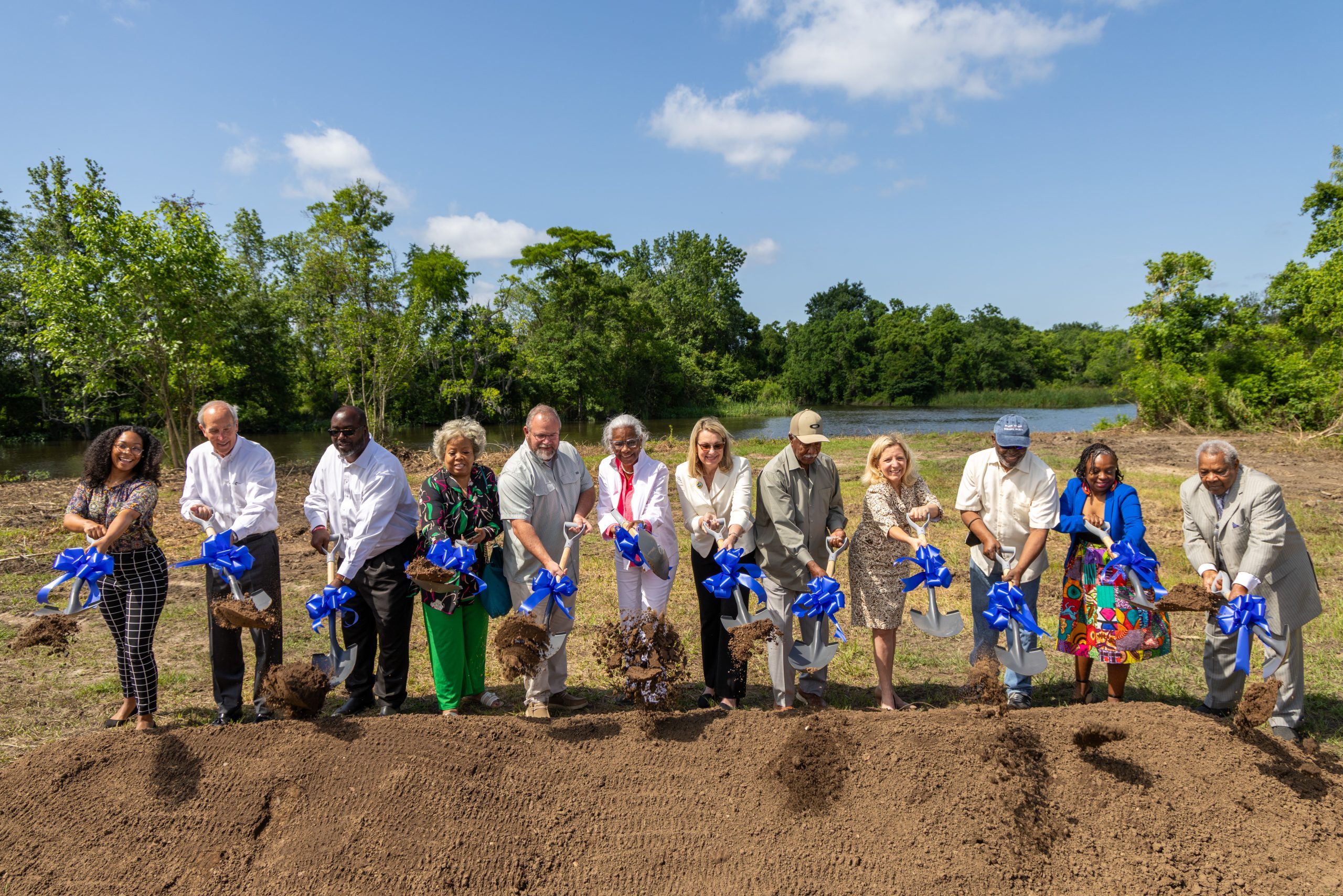
photo: Mobile County
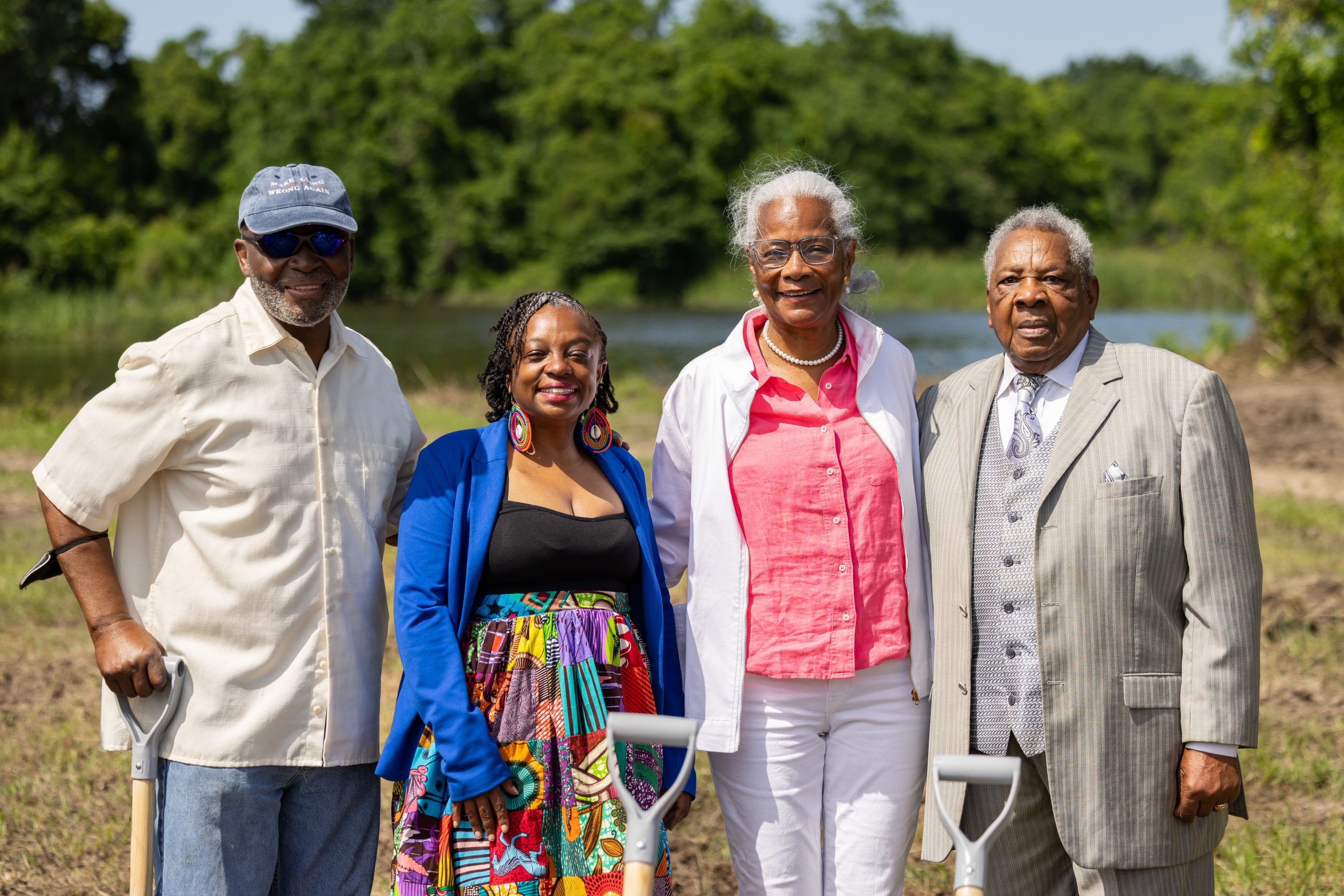
photo: Mobile County
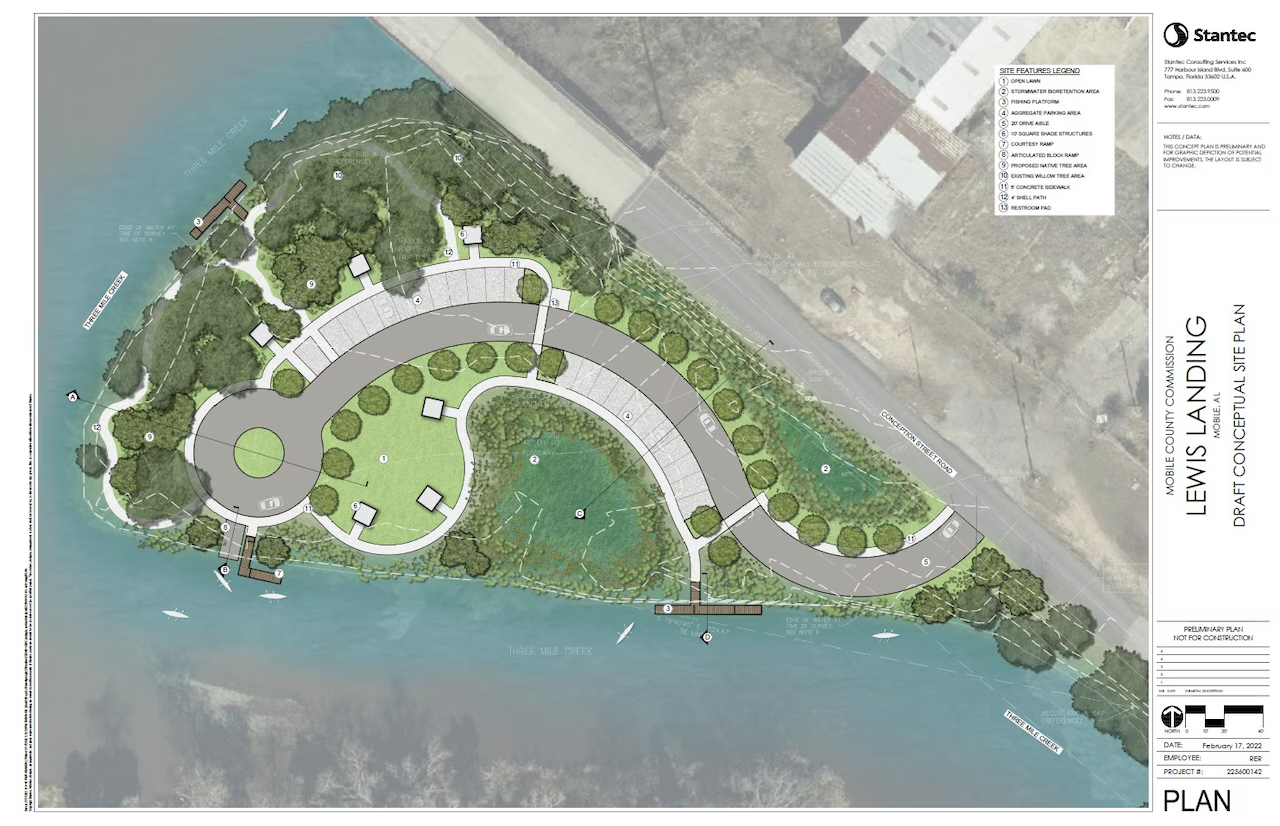
photo: Mobile County
In Conclusion
With so much opportunity, synergy, and momentum, the time to take the interest in cleaning up Hog Bayou and creating more recreational water access in Africatown is now. A Hog Bayou fit for Africatown’s future is well within grasp.
FLASHBACK: In 2015, Africatown residents, stakeholders, and advocates took a boat safari up into Hog Bayou. Check out the story “Africatown Boat Safari Highlights Hog Bayou’s Mobile-wide Connections” by MEJAC here.
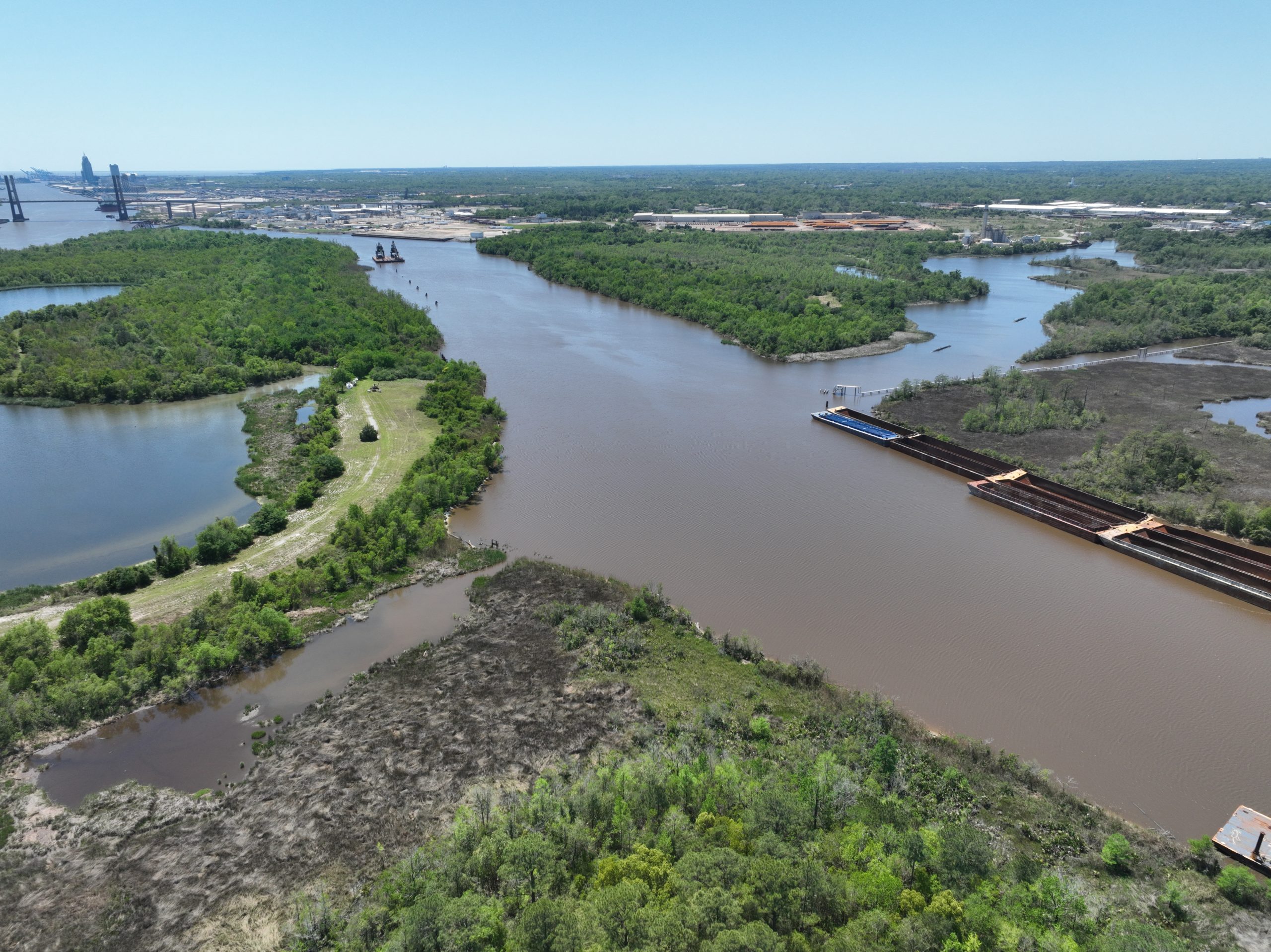
photo: Mobile Baykeeper